Tikri Border Metro Station (DMRC), Get the latest 2026 route map, first & last train timings, distance info and local transit guide.

Tikri Border Metro Station is an elevated station on the Green Line of the Delhi Metro, located right on the Delhi–Haryana border near Tikri Kalan village and the busy Rohtak Road corridor. In 2025, it continues to serve as a crucial gateway between outer West Delhi and Bahadurgarh, supporting daily commuters, industrial workers, students, and inter-state travelers with improving facilities, good intermodal connectivity, and a strategic position on the Inderlok–Brigadier Hoshiyar Singh stretch.
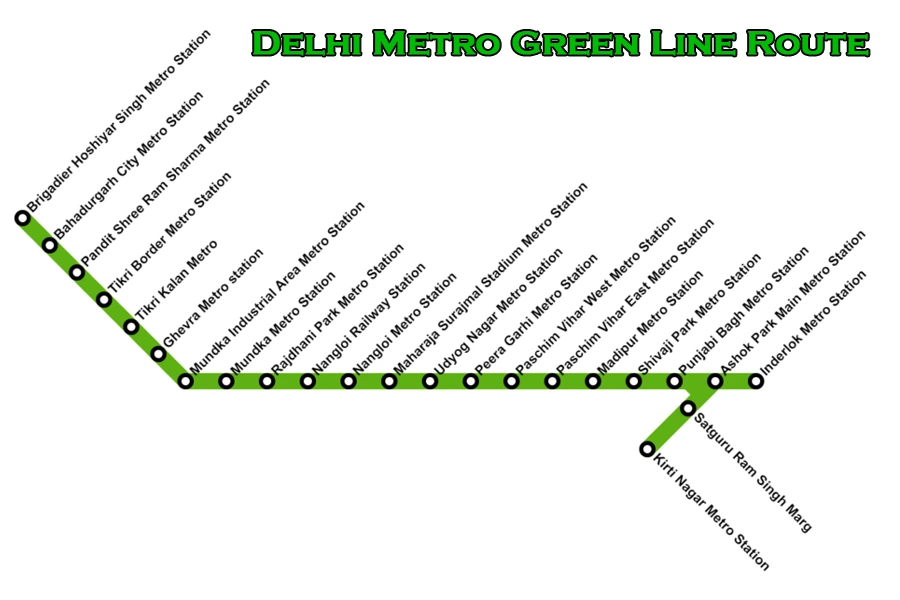
Delhi Metro Green Line Route 2026
Download Updated Delhi Metro Map 2026 – Click Here
| Station Name | Line/Interchange | Distance (km) | Fare (₹) | Travel Time (min) |
| Kirti Nagar | Green Line / Blue Line | 0.0 | 10 | 0 |
| Satguru Ram Singh Marg | Green Line | 1.2 | 10 | 2 |
| Inderlok | Green Line / Red Line | 2.5 | 20 | 3 |
| Ashok Park Main | Green Line / Green Line Branch | 5.0 | 20 | 6 |
| Punjabi Bagh | Green Line | 6.5 | 30 | 8 |
| Punjabi Bagh West | Green Line | 7.5 | 30 | 10 |
| Shivaji Park | Green Line | 8.5 | 30 | 11 |
| Madipur | Green Line | 9.5 | 30 | 12 |
| Paschim Vihar East | Green Line | 10.5 | 30 | 14 |
| Paschim Vihar West | Green Line / Blue Line | 11.5 | 30 | 15 |
| Peera Garhi | Green Line | 12.5 | 40 | 16 |
| Udyog Nagar | Green Line | 13.5 | 40 | 17 |
| Surajmal Stadium | Green Line | 14.5 | 40 | 19 |
| Nangloi | Green Line | 15.5 | 40 | 20 |
| Nangloi Railway Station | Green Line | 16.5 | 40 | 21 |
| Rajdhani Park | Green Line | 17.5 | 40 | 23 |
| Mundka | Green Line | 19.0 | 40 | 24 |
| Mundka Industrial Area | Green Line | 20.0 | 40 | 26 |
| Ghevra | Green Line | 21.0 | 40 | 27 |
| Tikri Kalan | Green Line | 22.0 | 50 | 28 |
| Tikri Border | Green Line | 23.0 | 50 | 30 |
| Pandit Shree Ram Sharma | Green Line | 24.0 | 50 | 31 |
| Bahadurgarh City | Green Line | 25.5 | 50 | 33 |
| Brigadier Hoshiyar Singh | Green Line | 27.96 | 50 | 36 |
Introduction
Tikri Border Station functions as a key transit hub on the Delhi Metro Green Line, linking Delhi’s outer fringe to rapidly growing parts of Haryana. Positioned along National Highway 10 (Rohtak Road), the station handles a mix of office commuters, factory workers, shoppers, and long-distance travelers who use it as a nodal point to shift between metro, buses, shared autos, and private vehicles.
In 2026, Tikri Border Metro has gained more relevance due to continuing development along the Mundka–Bahadurgarh belt, better road infrastructure, and stronger last-mile options connecting nearby colonies, markets, schools, and farmhouses. For passengers looking for a cost-effective, predictable, and relatively congestion-free way to enter Delhi from the border side, Tikri Border Station remains one of the most reliable choices on the Green Line.
Historical Background
Tikri Border Metro is part of the Green Line extension from Mundka to Bahadurgarh that was approved in 2012 and developed to improve regional connectivity between Delhi and Haryana. The extension, which added seven stations including Tikri Kalan, Tikri Border, and Brigadier Hoshiyar Singh, aimed to serve dense residential pockets, industrial areas, and the inter-state highway corridor. Tikri Border station itself opened to the public on 24 June 2018 as an elevated stop in Tikri Kalan village, bringing modern mass rapid transit to an area previously dominated by bus and road-based travel. Over subsequent years, the station has supported local economic growth and eased commuting for thousands of passengers crossing the Delhi–Haryana border daily.
Location and Connectivity
Tikri Border Metro Station is located in Netaji Subhash Vihar/Tikri Kalan area on the Delhi–Haryana border, directly along Rohtak Road (NH-10). This placement allows seamless access for passengers coming from both Delhi’s outer West belt and nearby Haryana settlements, including Bahadurgarh and surrounding industrial zones. Tikri Border Station lies on the Green Line route between Tikri Kalan and Pandit Shree Ram Sharma, connecting onward to Mundka, Inderlok, Bahadurgarh City, and Brigadier Hoshiyar Singh. Road connectivity is strong, with frequent DTC, cluster, and NCR-region buses, as well as shared auto-rickshaws and local cabs available from the station area to villages, markets, schools, and farmhouses nearby.
Quick Location Snapshot
| Detail | Information |
| Metro Line | Green Line (Line 5), Delhi Metro |
| Address (DM view) | Netaji Subhash Vihar, Delhi 110072 |
| Surrounding Area | Tikri Kalan village, Delhi–Haryana border |
| Adjacent Highway | Rohtak Road / NH-10 |
General Information
Tikri Border is an elevated metro station with side platforms serving trains on the Green Line between Inderlok/Kirti Nagar and Brigadier Hoshiyar Singh. Tikri Border Metro is categorized as a standard DMRC facility with paid parking, disabled-friendly access, lifts and escalators, basic commercial kiosks, token counters, and automatic ticket vending machines. Three gates open towards educational institutions, residential colonies, and the toll-tax side, helping to distribute passenger flow and enable easy entry/exit during peak hours. Regular train frequency on the corridor, coupled with clear bilingual signage and route maps, makes the station convenient even for first-time riders and cross-border commuters.
Construction
Tikri Border Station was constructed as part of the Mundka–Bahadurgarh elevated extension on pre-stressed concrete viaducts running over Rohtak Road. The elevated design minimized land acquisition challenges along the busy highway while allowing metro tracks to pass above mixed traffic, shops, and service lanes. Typical DMRC construction standards can be seen in the station’s two-level structure, with concourse and platform levels supported by robust piers and cross-girders. Tikri Border Metro integrates structural provisions for lifts, staircases, escalators, and utilities, and has been designed to handle high wind loads and vibration, ensuring safe operations even as traffic and ridership continue to grow.
Station Layout
Tikri Border follows a standard elevated layout used across many Green Line stations, ensuring easy wayfinding for regular Delhi Metro users. Passengers enter at the ground level through designated gates, proceed to the concourse level for ticketing and security checks, and then move to the platform level via stairs, lifts, or escalators. Platform 1 generally caters to trains heading towards Brigadier Hoshiyar Singh/Bahadurgarh side, while Platform 2 is aligned for trains going towards Mundka, Inderlok, or Kirti Nagar, depending on the service pattern. Clear signage, route maps, and LED indicators help riders identify the correct direction and train type, reducing confusion during interchanges and long cross-city journeys.
Station Layout Overview
| Level | Key Features |
| Ground | Entry/exit gates, parking access, shared autos, buses |
| Concourse | Security, ticket counters, ATVMs, customer care, kiosks |
| Platform | Two elevated platforms for Green Line trains |
Entry/Exit Gates and Facilities
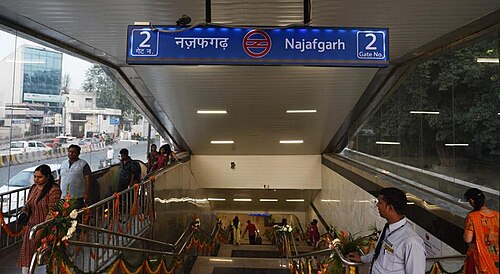
Tikri Border Metro has multiple entry/exit gates connecting to specific neighborhoods, institutions, and the toll-tax side, making gate choice important for quick last-mile access. Gate 1 serves Lekhram Colony, Tikri Market, Geetanjali Colony, PVC Road/Market, Shri Ram Global School, and Govt. Boys Senior Secondary School, making it ideal for students and local residents. Gate 2 opens towards Tikri Border Toll Tax, Hira Market, Haridas Colony, and Kodiya Colony, helping bus travelers and inter-state passengers access the station easily. Some sources also list a third gate configuration for nearby government schools and toll-tax connectivity, ensuring better passenger dispersal during peak times.
Gates and Nearby Landmarks
| Gate No. | Main Access Areas / Landmarks |
| Gate 1 | Lekhram Colony, Tikri Market, Geetanjali Colony, PVC Market, Shri Ram Global School, Govt. Boys Sr. Sec. School |
| Gate 2 | Tikri Border Toll Tax, Hira Market, Haridas Colony, Kodiya Colony |
| Gate 3* | Govt. schools and toll-tax side (as per some route/guide listings) |
*Gate numbering and description may vary slightly across third-party route planners but broadly cover the same catchment.
Public Transport Availability
Public transport around Tikri Border Station is a major strength, especially for riders coming from villages and industrial areas along the Delhi–Bahadurgarh axis. Multiple DTC and cluster buses, including routes like 926/926STL, 949/949STL2, and select NCR services, stop near Tikri Border, allowing direct connections to Najafgarh side, central Delhi, and Haryana destinations. Shared autos, e-rickshaws, and private vans commonly operate near the gates, feeding nearby colonies, markets, godowns, and farmhouses. For longer journeys, passengers can use Tikri Border as a transfer point: take the Green Line into the network and then change at key interchange stations like Punjabi Bagh West, Kirti Nagar, Inderlok, and further towards Kashmere Gate or Rajiv Chowk.
Accessibility Features
Tikri Border is designed to be accessible for passengers with reduced mobility, senior citizens, and those carrying luggage. The station offers lift access between concourse and platform levels, along with escalators and staircases to manage different passenger needs and peak crowd loads. Divyang-friendly features such as ramps, tactile paving, designated wheelchair routes, and priority seating on platforms and trains are part of Tikri Border Station’s infrastructure. Clear audio announcements, visual indicators, and bilingual signage further support passengers who may have hearing or visual challenges, contributing to inclusive travel from the border region into the city.
Navigating Tikri Border Metro Station
Navigating Tikri Border Station is straightforward once passengers understand the gate locations, concourse features, and platform directions. On arrival, riders typically choose the nearest gate based on their origin point, pass through security screening, and head to the concourse where they can buy tokens, recharge smart cards, or use automatic ticket machines. After completing ticketing, passengers follow clearly marked signs to the appropriate platform, checking electronic boards for the correct direction (towards Inderlok/Kirti Nagar or Brigadier Hoshiyar Singh/Bahadurgarh). For long journeys, it is helpful to pre-plan interchange points like Punjabi Bagh West or Inderlok and confirm last train timings to avoid being stranded at the border late at night.
Basic Navigation Flow
| Step | Action |
| 1 | Enter via nearest gate and clear security |
| 2 | Purchase or recharge ticket at concourse |
| 3 | Move to platform via lift/escalator/stairs |
| 4 | Board train towards your interchange or final stop |
Nearby Markets and Attractions
The area around Tikri Border Metro is a mix of local markets, highway-side commercial activity, educational institutions, and evolving hospitality options such as farmhouses and event venues. Tikri Market and PVC Market near Gate 1 are key spots for daily-use goods, building materials, hardware, and small retail stores serving local residents and industrial workers. Hira Market and nearby shops on the toll-tax side cater to both truckers and inter-state travelers, offering eateries, repair services, and road-side utilities. In 2025, a growing number of farmhouses and resort-style properties around the Tikri belt are being marketed for short stays, weddings, and events, making Tikri Border an access point for guests coming from Delhi and nearby cities.
Markets and Places Around Tikri Border
| Place/Market | Approx. Nature/Use |
| Tikri Market | Daily goods, local shops, hardware |
| PVC Road/Market | Building material, hardware, wholesale |
| Hira Market | Roadside shops, eateries, travel services |
| Farmhouses belt | Events, stays, functions near border |
Nearby Residential and Commercial Properties
Tikri Border serves several residential colonies and developing commercial clusters in and around Tikri Kalan and the border stretch. Lekhram Colony, Geetanjali Colony, Haridas Colony, and Kodiya Colony benefit from walking-distance access to Tikri Border Station, enhancing daily commute options for local residents. The highway-facing belt hosts godowns, warehouses, small industrial units, and logistics-related businesses that rely on both highway and metro connectivity for workforce movement. In recent years, there has been growing interest in farmhouses and low-density residential plots around the Tikri–Ghevra–Bahadurgarh corridor, with Tikri Border metro acting as a selling point for easier access to Delhi’s core.
User Review and Passenger Experience
Passengers using Tikri Border Metro often highlight its convenience for cross-border commuting and its role in reducing dependence on crowded buses along Rohtak Road. The presence of parking, divyang-friendly access, and basic amenities like toilets, lifts, and ticket machines contributes to a generally satisfactory experience for daily riders. However, as with many edge-of-city stations, users sometimes mention crowding during peak factory shift hours, occasional congestion at gates connecting with buses and shared autos, and the need for better last-mile integration towards interior villages. Overall, the station is perceived as a dependable node that offers predictable travel time into central Delhi compared to road-only options, especially during heavy traffic on the inter-state corridor.
Security Features
Tikri Border Metro implements standard DMRC security protocols, including baggage screening, metal detectors, and CCTV surveillance covering platforms, concourses, and entry/exit zones. CISF or designated security personnel monitor Tikri Border Station premises, manage access control, and respond to emergencies or suspicious activity. During periods of heightened alerts, public protests, or special events, authorities may temporarily regulate entry/exit at stations along the Tikri Kalan–Brigadier Hoshiyar Singh stretch, as seen in official advisories about gate closures in this belt. Public announcements, help points, and visible security presence contribute to a sense of safety for passengers traveling early morning or late evening from the border region.
Nearby Metro Stations
Tikri Border sits strategically on the western side of the Green Line, with neighboring stations providing additional access to localities on both Delhi and Haryana sides. Towards Delhi, Tikri Kalan and Ghevra Metro stations serve rural-urban fringe areas with farms and emerging residential pockets. Towards Haryana, Pandit Shree Ram Sharma, Bahadurgarh City, and Brigadier Hoshiyar Singh stations open further options for commuters coming from industrial estates, bus terminals, and town centers. These adjacent stations help distribute ridership, manage peak crowds, and provide riders with flexibility in choosing the nearest boarding point based on home or workplace location.
Key Nearby Metro Stations on Green Line
| Station Name | Direction from Tikri Border | Key Catchment / Features |
| Tikri Kalan | Towards Delhi | Rural-urban belt, local markets, farms |
| Ghevra Metro Station | Towards Delhi | Farmlands, low-density residential pockets |
| Mundka / Mundka Ind. Area | Further towards Delhi | Industrial estates, interchange options |
| Pandit Shree Ram Sharma | Towards Haryana | Industrial zones, local residential pockets |
| Bahadurgarh City | Towards Haryana | Town center, bus stand, markets |
| Brigadier Hoshiyar Singh | Terminal towards Haryana | City Park area, further regional access |
Connectivity to Important Locations
Tikri Border Metro Station offers direct and indirect connectivity to important locations across Delhi via the Green Line and interchanges at key junctions. Passengers can travel from Tikri Border to New Delhi Railway Station by taking the Green Line, interchanging at Kashmere Gate to the Yellow Line, and then alighting at New Delhi, with a typical fare in the mid-range and travel time around an hour plus. For South Delhi destinations like Green Park, passengers can ride the Green Line, change at Punjabi Bagh West to the Pink Line, then interchange again for the Yellow Line at Dilli Haat–INA or similar junctions, reaching Green Park in about 70–75 minutes.
Key employment hubs, markets, and institutions in areas like Rajouri Garden, Karol Bagh, Connaught Place, and central Delhi become accessible through thoughtful interchange planning via Punjabi Bagh West, Kirti Nagar, Inderlok, or Kashmere Gate.
Sample Route Examples
| Origin – Destination | Indicative Path via Metro |
| Tikri Border – New Delhi Metro Station | Green Line → Kashmere Gate → Yellow Line to New Delhi |
| Tikri Border – Green Park Metro Station | Green Line → Punjabi Bagh West → Pink Line → Yellow Line |
| Tikri Border – Rajiv Chowk (CP) | Green Line → Kashmere Gate → Yellow Line to Rajiv Chowk |
Facilities and Amenities in 2025
In 2025, Tikri Border Metro continues to offer a standard but practical set of facilities aimed at comfort, safety, and convenience for border-region passengers. Tikri Border Station provides washrooms (including Sulabh toilet facilities near certain gates), lifts, escalators, seating areas on platforms, and shaded waiting spaces at ground-level approaches. Parking for both two-wheelers and cars is available, making it easier for riders from slightly distant colonies or farmhouses to park and ride the metro rather than taking the entire journey by road. Token counters, automatic ticket vending machines, and occasional small kiosks (for snacks or basic utilities) complete the commuter ecosystem, while real-time information screens help passengers track upcoming trains.
Selected Facilities Snapshot
| Facility | Availability/Detail |
| Toilet | Available (e.g., Sulabh near Gate side) |
| Parking | Car and bike parking available |
| Lift/Esclator | Yes, divyang-friendly access |
| Ticketing | Counters and automatic ticket machines |
First and Last Metro Timings and Frequency
While exact timings can vary slightly by day and schedule updates, Tikri Border generally follows Green Line operational patterns, with early morning and late-night services that support both office commuters and industrial workers. For many Green Line stations, first trains towards Brigadier Hoshiyar Singh and towards Inderlok/Kirti Nagar often begin around 5:45–6:15 AM, with last services typically operating around 10:00–10:30 PM, depending on direction and day.
At Tikri Border, train frequency during peak hours is typically in the mid-single-digit minutes, with off-peak intervals slightly higher, ensuring that passengers do not need to wait long even on the border stretch. Riders are encouraged to check the latest DMRC announcements and station notice boards for adjusted timings during festivals, maintenance, or security-related changes.
Impact of 2026 Updates and Operational Changes
In 2026, Tikri Border Station continues to adapt to broader network improvements, operational refinements, and security or crowd-management directives on the Green Line. Occasional advisories have highlighted temporary gate closures or restricted entry/exit across stations between Tikri Kalan and Brigadier Hoshiyar Singh during specific security situations or protests, underlining how border stations can be affected by wider events. At the same time, ongoing enhancements in timetable coordination, public information systems, and integration with other Delhi Metro lines help maintain reliable end-to-end connectivity for long-distance riders. As urbanization continues along the Delhi–Bahadurgarh corridor, Tikri Border is likely to see gradual increases in ridership, more last-mile options, and growing commercial activity around the station zone.
Conclusion
Tikri Border Metro Station stands as a crucial access point on the Delhi Metro Green Line, connecting the Delhi–Haryana border region with core city areas through a reliable and efficient transit system. Its elevated design, divyang-friendly features, structured station layout, and multiple entry/exit gates make it suitable for everyday commuters, students, industrial workers, and travelers entering or leaving Delhi via Rohtak Road. In 2025, the station benefits from robust public transport integration, evolving nearby markets and properties, and strong connectivity to significant locations through planned interchanges across the network. For those seeking a practical, time-saving alternative to congested road journeys at the border, Tikri Border Station remains a dependable and strategically positioned choice.