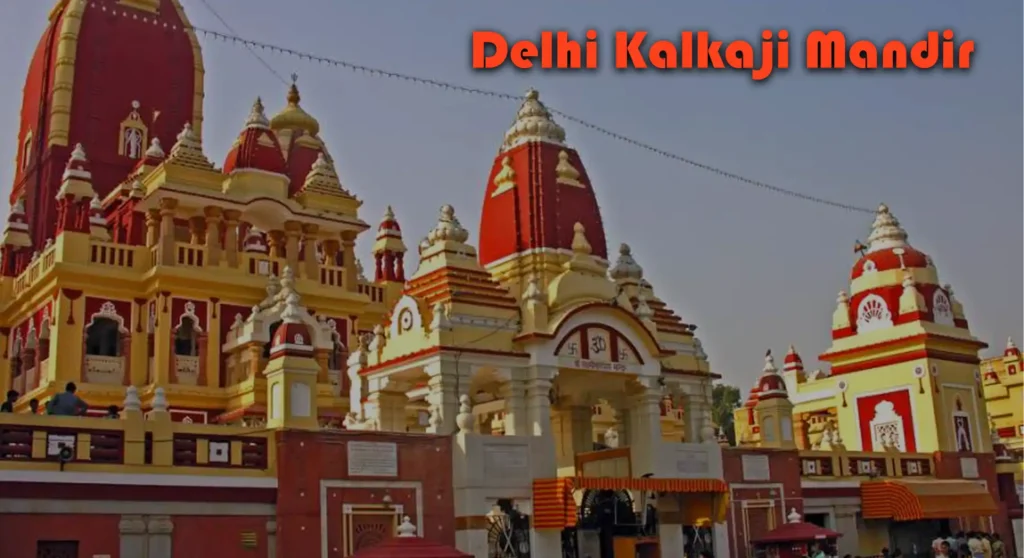
Delhi Kalkaji Mandir, a powerful Siddh Peeth of Maa Kalka in South Delhi. Learn timings, history, aarti schedule, nearest metro, Navratri crowd, darshan tips and nearby attractions for a smooth temple visit.
Delhi Kalkaji Mandir, also known as Kalka Ji Temple or Shri Kalkaji Mandir, is an ancient Hindu temple dedicated to Goddess Kali in her Kalka form. The surrounding locality, Kalkaji, actually derives its name from this temple, showing its long-standing influence on the area’s identity and development.
The temple is considered a powerful Siddh Peeth and is also popularly called “Manokamna Siddh Peeth” or “Jayanti Peetha”, as devotees believe that sincere prayers here help in the fulfillment of wishes. People from Delhi, NCR and across India visit the shrine for blessings related to health, career, marriage, children, exams, business and overall protection from negative forces.
Location, address and area overview
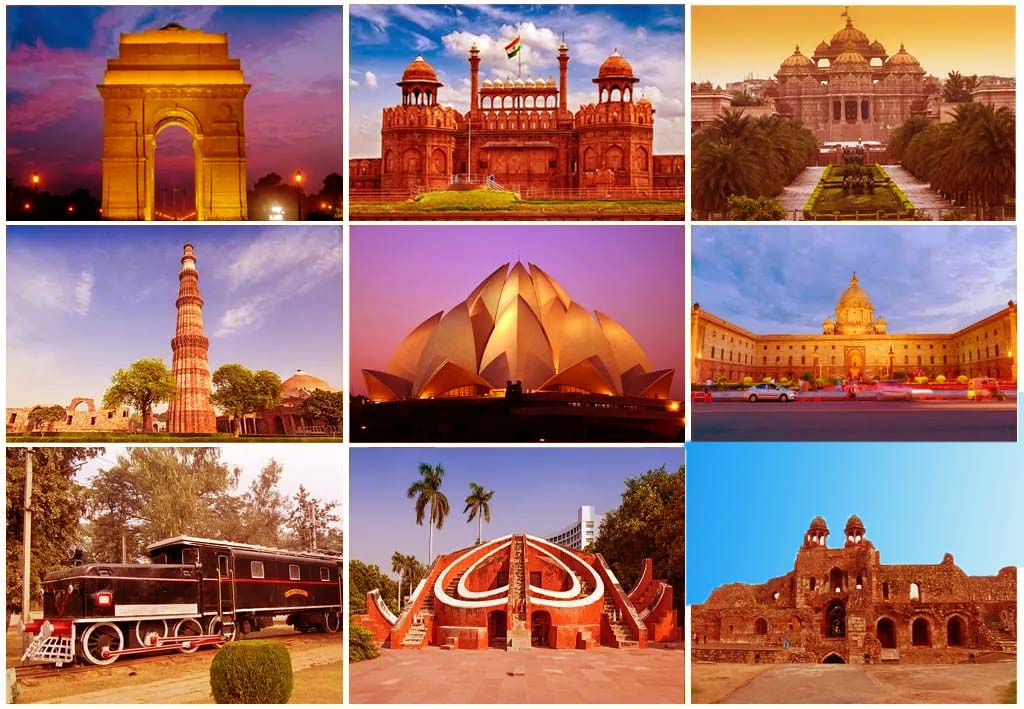
Delhi Kalkaji Mandir is situated in South Delhi, directly opposite the busy Nehru Place commercial hub and very close to Lotus Temple and ISKCON Temple, forming a major spiritual and tourist cluster. The temple stands near the foothills of the ancient Aravalli range, giving the surroundings a slightly elevated rocky terrain compared to the central parts of Delhi.
- Locality name: Kalkaji, South Delhi.
- Landmark zone: Opposite Nehru Place, near Lotus Temple and ISKCON Temple.
- Administrative context: Falls under South East Delhi district, with dense residential colonies like Kalkaji, Govindpuri, East of Kailash and Greater Kailash nearby.
Because of this prime location, a visit to Delhi Kalkaji Mandir is often combined with shopping at Nehru Place, a walk at Lotus Temple lawns and darshan at ISKCON, making it ideal for family day trips and group tours.
History and legends of Kalkaji Mandir
The site of Delhi Kalkaji Mandir is believed to be one of the oldest Shakti worship spots in Delhi, with references suggesting that the shrine existed in some form even in ancient yugas. Local traditions say that the place has been revered since Satya Yuga and that the Pandavas and Lord Krishna themselves worshipped the Goddess here before the Mahabharata war.
Historically, the present masonry structure dates back to around 1764, when it was significantly rebuilt during the late Mughal–Maratha period and later expanded in the 19th century. Over time, devotees and local patrons added verandahs, side shrines, dharamshalas and boundary walls, gradually giving the complex its current multi-layered appearance.
According to the main legend, Maa Kalka incarnated here to slay the demon Raktabij and his army, symbolising the victory of Shakti over negativity and repeated cycles of evil. Because of these stories and the temple’s age, Delhi Kalkaji Mandir is counted among the important Shakti Peeth–style shrines in North India, and many devotees consider a visit here akin to undertaking a mini pilgrimage within Delhi itself.
Deity and spiritual significance
The presiding deity of Delhi Kalkaji Mandir is Maa Kalka or Maa Kalkaji, identified as a fierce yet benevolent form of Goddess Kali and Durga, symbolising protection, strength, and destruction of evil. Devotees see her as a mother who quickly responds to sincere prayers, especially for safety from adversities, victory in difficult situations and inner courage.
The main idol is housed in the garbh-griha (sanctum sanctorum) and is worshipped with diyas, incense, flowers, red chunri, and offerings like halwa, sweets and coconuts. Many visitors perform mannats (vows), including walking barefoot, tying sacred threads, or offering specific prasad once their wishes are fulfilled, reinforcing the temple’s reputation as a Manokamna Siddh Peeth.
Temple architecture and complex layout
Delhi Kalkaji Mandir’s architecture is quite distinct compared to many large North Indian temples because it combines a simple layout with intense devotional activity. The modern shrine is described as a 12-sided structure made largely of brick, plaster, black stone and marble, crowned by a pyramidal tower or shikhara.
The central chamber is surrounded by a verandah that forms a circumambulatory path for devotees to perform parikrama around the sanctum. There are multiple entry gates (often counted as 12 in popular description) symbolically associated with different directions and forms of devotion, helping manage heavy crowds during festivals. Inside the complex, you will find small shrines dedicated to Kal Bhairav, Lord Ganesha, Maa Santoshi, Shiva, Durga and other deities, along with areas where mundan (head-shaving) and other rituals are performed.
Kalkaji Mandir timings and aarti schedule
Knowing the correct temple timings is crucial for planning a smooth darshan, especially given the rush during mornings, evenings and Navratri. While exact timing can shift with seasons and special events, there is a fairly consistent daily schedule that most sources highlight.
Typical opening and closing hours indicate that the temple opens very early in the morning (around 4:00–5:00 AM) and remains accessible until late at night, with short closures for cleaning and Shringar. Aartis are performed multiple times a day—especially at sunrise and in the evening—and many devotees prefer to attend these specific slots to experience the full spiritual ambiance and devotional chanting.
Delhi Kalkaji Mandir Daily darshan schedule (indicative)
- General darshan timings often span from early morning (around 4:00–5:00 AM) till approximately 11:30 AM, then again after a short noon break from around 12:00 PM to 3:00 PM, and finally from 4:00 PM till about 11:30 PM.
- There are brief closures in between for cleaning and preparation (Shringar), so visitors should avoid cutting it too close to these intervals.
Because Navratri or special pooja days can cause modifications in the schedule, it is always advisable for serious pilgrims or large groups to cross-check timings on the latest local or temple-specific information sources just before their visit.
Best time to visit Delhi Kalkaji Mandir
While Delhi Kalkaji Mandir remains busy throughout the year, some time slots and seasons are more comfortable and spiritually immersive than others. On regular days, early morning darshan during Mangala Aarti or just after sunrise tend to be relatively less crowded and more peaceful, making them ideal for family visits and elderly devotees.
Evenings around aarti time offer a different experience with glowing diyas, devotional bhajans and a more festive ambiance, though the crowds are usually heavier then. Seasonally, the most intense and spiritually charged period is Navratri (both Chaitra and Sharad), when lakhs of devotees queue up, and the temple remains decorated, illuminated and filled with continuous chants, but this also means longer waiting times and tighter security.
Kalkaji Mandir during Navratri and festivals
Navratri transforms Delhi Kalkaji Mandir into one of the most vibrant spiritual hubs of Delhi, with non-stop crowds, special decorations, and a continuous flow of bhajans and aartis. Long queues often start forming from the early hours, and many devotees walk in bare feet for several kilometres, perform jagrans or bring offerings like chunri, coconuts, flowers and prasad in large quantities.
Besides Navratri, days like Diwali, Durga Ashtami, Chaitra Navratri, Kali Puja and certain Amavasya and Purnima tithis also witness special rituals and increased footfall. Local vendors selling pooja items, prasad, toys, bangles and street food line the approach roads, turning the entire neighbourhood into a buzzing fair-like zone, especially during peak festival nights.
How to reach Kalkaji Mandir (all modes)
Delhi Kalkaji Mandir is extremely easy to reach because it is located close to major roads and is served by an interchange metro station on two busy lines of the Delhi Metro network. This combination of road and rail connectivity makes it convenient for both Delhi residents and outstation visitors arriving by train, bus or flight.
From central Delhi and Old Delhi, most people either use the Violet Line metro or a combination of metro and bus/auto to reach Nehru Place or Delhi Kalkaji Mandir metro stations. Those coming from NCR regions like Noida, Faridabad or Gurugram often prefer direct metro routes via Botanical Garden, Janakpuri West, Ballabhgarh or interchange points like Kalkaji Mandir, Hauz Khas and Mandi House.
Nearest metro station to Kalkaji Mandir
The primary metro access point for the temple is Kalkaji Mandir Metro Station, which functions as an interchange between the Violet Line and the Magenta Line. The station is named after the temple itself, and the walking distance from the metro to the temple is roughly in the range of a few hundred metres, making it an easy 5–10 minute walk for most visitors.
- Metro Station Name: Kalkaji Mandir Metro Station.
- Lines: Violet Line (Kashmere Gate – Raja Nahar Singh) and Magenta Line (Janakpuri West – Botanical Garden).
- Approximate walking distance to temple: Around 400–500 metres using the designated exit towards the temple/Nehru Place side.
Another option sometimes mentioned is Okhla NSIC or Nehru Place Metro, depending on your exact walking preference and route planning, but the most straightforward and commonly used station remains Delhi Kalkaji Mandir Metro Station itself due to direct naming and signage for devotees.
Metro station gates and nearby landmarks
Delhi Kalkaji Mandir Metro Station has multiple gates, each opening towards different neighbourhoods and landmarks around the area. One of the gates leads conveniently towards Lotus Temple and the temple side, while others open towards blocks in Kalkaji, Nehru Place bus stand and nearby commercial buildings.
- Some gates connect directly towards Lotus Temple and Delhi Kalkaji Mandir approach roads, offering shortest walking routes for pilgrims.
- Other gates open towards MTNL Building, Nehru Place Market and Bhairav Mandir side, useful if you are combining darshan with shopping or office visits.
Because signages at the station mention both Lotus Temple and Delhi Kalkaji Mandir, new visitors can simply follow the boards pointing towards the temple exit after alighting from the train.
Road connectivity and bus routes
In addition to the metro, Delhi Kalkaji Mandir enjoys strong road connectivity via the Outer Ring Road, Nehru Place, and nearby arterial routes linking to Okhla, Greater Kailash and East of Kailash. Delhi Transport Corporation (DTC) and cluster buses frequently pass through Nehru Place Terminal and bus stops labelled Delhi Kalkaji Mandir or nearby localities, making it simple for those travelling from bus-dominant corridors.
Auto-rickshaws, app-based cabs and cycle-rickshaws are easily available around Nehru Place, Govindpuri and Kalkaji, and they often run short shared trips for darshan visitors, especially during evenings and Navratri. For outstation travellers, it is common to reach New Delhi or Hazrat Nizamuddin railway station first and then take a direct metro or road transit to the temple area.
Distance from major Delhi hubs
Because Delhi Kalkaji Mandir lies in South Delhi, distances from different parts of the city vary, but they remain manageable in terms of metro time. From central landmarks like Connaught Place or Old Delhi, most routes take between 25–45 minutes by metro depending on line changes and crowd conditions.
The temple is only a short ride away from important NCR entry points like Noida through Botanical Garden or Okhla Bird Sanctuary interchanges and is similarly accessible from south-western Delhi via Hauz Khas and Janakpuri West route on the Magenta Line. For tourists planning a day-long city tour, combining Delhi Kalkaji Mandir with Lotus Temple and ISKCON Temple can be easily done in half a day using the violet-magenta corridor.
Darshan experience and rituals
The darshan experience at Delhi Kalkaji Mandir is intense and devotional, with a continuous flow of devotees lining up to enter the sanctum, offer prayers and receive blessings. Inside the main chamber, people typically offer flowers, chunri, coconuts, sweets and coins, light diyas, and touch their heads to the steps near the idol, while priests conduct regular pujas and distribute prasad.
Many visitors choose to perform parikrama around the central shrine, use the side shrines for extended prayers, and spend some time sitting in corners of the complex, absorbing the spiritual atmosphere despite the general bustle. On special days, one can witness elaborate aartis, drum beats, conch blowing and bhajan singing that create a powerful sense of collective devotion and energy within the temple premises.
Aarti, pooja and special ceremonies
The temple follows a structured schedule of aartis and poojas throughout the day, starting with early morning Mangala Aarti and moving through mid-day and evening rituals. Each aarti slot carries its own mood—mornings feel fresh and peaceful, while evenings are vibrant and more crowded, with greater participation from working devotees who come after office hours.
Families often perform individual poojas for specific purposes such as child welfare, marriage, exam success and business prosperity, by coordinating with temple priests or authorised counters. Mundan (head-shaving) ceremonies and certain sanskars are also conducted in designated corners of the complex, particularly for young children whose parents believe in starting their spiritual journey under Maa Kalka’s protection.
Rules, dress code and etiquette
Like most major Hindu temples, Delhi Kalkaji Mandir encourages modest and respectful dress, especially during festival seasons and peak hours. Visitors are expected to cover shoulders and knees as far as possible and avoid overly revealing outfits, keeping in mind the sentiments of fellow devotees.
Footwear must be removed outside the main premises at designated stalls or racks before entering the temple complex. While photography outside and in the approach lanes is common, it is advisable to respect signage and priests’ guidance regarding photography or videography in the core sanctum and during aarti, especially when the crowd is heavy and movement is tightly managed.
Facilities and arrangements for devotees
Over the years, Delhi Kalkaji Mandir has added basic facilities for pilgrims such as water arrangements, crowd control barricades, and dharamshala-style accommodations in the vicinity. The verandah areas and surrounding spaces are designed to accommodate large queues, with railings and separate entry–exit paths for more orderly movement during festivals.
Nearby, you can find shops selling pooja items, prasad, garlands and religious souvenirs, along with food stalls serving chai, snacks and simple meals. For longer stays or outstation visitors, there are hotels, guest houses and lodges in areas like Nehru Place, Kalkaji and Greater Kailash, catering to different budgets and making it easy to plan multi-day temple visits or city tours.
Street food and shopping around the temple
The lanes leading to Delhi Kalkaji Mandir and nearby Nehru Place and Kalkaji markets offer a lively blend of religious and urban Delhi flavours. Devotees often stop at sweet shops for prasad items like peda, ladoo and halwa, while small vendors pace around with bangles, bindis, toys and devotional pictures of Maa Kalka and other deities.
A short walk towards Nehru Place opens up a dense commercial zone known for electronics, mobile accessories and IT services, where visitors can combine darshan with shopping or food-court style meals. For those interested in a more relaxed outing, the landscaped lawns and serene environment around Lotus Temple provide a calming contrast to the bustling temple approach roads, giving a well-rounded day-out experience.
Nearby attractions and places to visit
One of the biggest advantages of visiting Delhi Kalkaji Mandir is the cluster of important attractions located within a short distance, allowing visitors to plan a compact but rich spiritual and sightseeing circuit. The most popular combination is Delhi Kalkaji Mandir, Lotus Temple and ISKCON Temple, all of which lie within a small radius in South Delhi and are well-connected through the same metro corridor.
- Lotus Temple (Bahá’í House of Worship) is known for its white lotus-shaped architecture and meditation halls, offering a silent, universal prayer space.
- ISKCON Temple in East of Kailash focuses on Lord Krishna, with regular kirtans, exhibitions and a museum, drawing spiritual tourists and families.
- The wider area also grants easy access to markets like Nehru Place, Greater Kailash M Block and small local parks, giving visitors multiple ways to utilise their time before or after darshan.
Kalkaji Mandir Metro Station overview
Because the metro plays such an important role in bringing devotees to the temple, Delhi Kalkaji Mandir Metro Station is often treated as part of the overall pilgrimage ecosystem. As an interchange station between Violet and Magenta lines, it allows convenient transfers without exiting the paid area, reducing journey time and effort for commuters from different corridors of Delhi and NCR.
The station has multiple levels, clear signage and escalators, with separate platforms for each line and gate-level exits leading towards key landmarks like Lotus Temple, Nehru Place and the temple approach roads. On busy festival days, both DMRC and local authorities often coordinate to manage crowd flow at this station, ensuring smoother dispersal of devotees visiting Delhi Kalkaji Mandir and other nearby spiritual sites.
Key facts: Kalkaji Mandir vs Kalkaji Mandir Metro Station
| Aspect | Kalkaji Mandir Temple | Kalkaji Mandir Metro Station |
| Main purpose | Hindu temple dedicated to Maa Kalka/Kali. | Interchange metro station on Violet & Magenta Lines. |
| Location | Kalkaji locality opposite Nehru Place, near Lotus Temple. | Near Nehru Place, serving Kalkaji, Govindpuri, East of Kailash. |
| Role for visitors | Spiritual darshan, pooja, festivals, Navratri celebrations. | Primary transport hub for devotees and commuters. |
| Timings | Early morning to late night with aarti slots. | Metro operating hours as per DMRC schedule. |
Safety, crowd management and tips
Given the massive footfall, especially during Navratri and weekends, Delhi Kalkaji Mandir and its surroundings can get very crowded, so basic safety precautions are important. Families with children and elderly members should arrive early, stay together in queues, and agree on a common meeting point in case anyone gets separated.
Valuables should be carried carefully and avoidable items left at home or hotel to streamline movement through security checks and narrow passages. Comfortable footwear (for the walk from metro and within the area), light clothing, a small bottle of water, and patience in queues will make the overall darshan experience more pleasant, especially on hot days or peak evenings.
Travel tips for first-time visitors
First-time visitors to Kalkaji Mandir often benefit from keeping a few practical points in mind that align with both spiritual and logistical aspects of the visit. Planning the journey around less-crowded time slots, carrying minimal but essential belongings and learning basic mantra or aarti lines in advance can help you connect more deeply with the atmosphere of the temple.
Using metro for the main journey and then an easy walk or short rickshaw ride to the temple reduces parking worries and traffic delays, especially in peak hours at Nehru Place. Combining darshan with nearby sites like Lotus Temple and ISKCON Temple can turn the visit into a wholesome spiritual mini-tour, ideal for families, couples and solo travellers exploring Delhi’s sacred landscape.